
Industry insights | May 2026
How consumer demand for flexibility is reshaping travel – and what airlines, hotels, financial institutions, and travel brands could do next.
Download PDF
Travel disruptions are no longer an occasional occurrence – they have become a reality of the
modern travel experience. While airlines have invested heavily in building more resilience into their networks and technology, many severe disruptions in recent years have been caused by factors outside of their control.
From weather events, capacity constraints, labor shortages, to airport operational issues and recent geopolitical turmoil, travelers today are booking in an environment of uncertainty. In response, consumer expectations have fundamentally shifted.
Flexibility is no longer a secondary consideration, it is becoming a central factor in how travel is evaluated, purchased and experienced today. The question for today’s airlines, hotels, travel providers and financial institutions is no longer whether customers want flexibility, but how the industry is delivering it.
This report draws on primary consumer research conducted in March 2026 in partnership with Opinium across over 1,000 US travelers to understand the traveler experience and quantify demand for flexibility today. The findings highlight the extent of consumer concern around travel disruptions and changing plans, identify the highest-demand segments for solutions and outline clear product and commercial implications for the travel industry.
By downloading this content, you consent to HTS using your information to share relevant products, services, offers, and insights in accordance with its Privacy Policy.

84% of travelers rate flight booking flexibility as important for upcoming trips, and 87% say the same for hotel stays. Strong demand is especially clear among frequent travelers, younger generations of travelers and those blending business and leisure trips — groups that represent significant value to today’s travel providers. These findings are underpinned by the fact that a majority of travelers show a strong willingness to purchase products that help prepare ahead of disruptions and add more flexibility to future trips — pointing to clear demand for flexibility solutions among today’s modern travelers.
The data reveals a pattern consistent with what the industry’s fastest-growing players have already discovered: consumers are prepared and willing to pay for certainty.
PARTNERS THE OPPORTUNITY
Flight cancellations and delays are now the number one concern for US air travelers, named by nearly seven in ten consumers. Day of travel disruptions have evolved from a rare occurrence into a universal consumer experience.
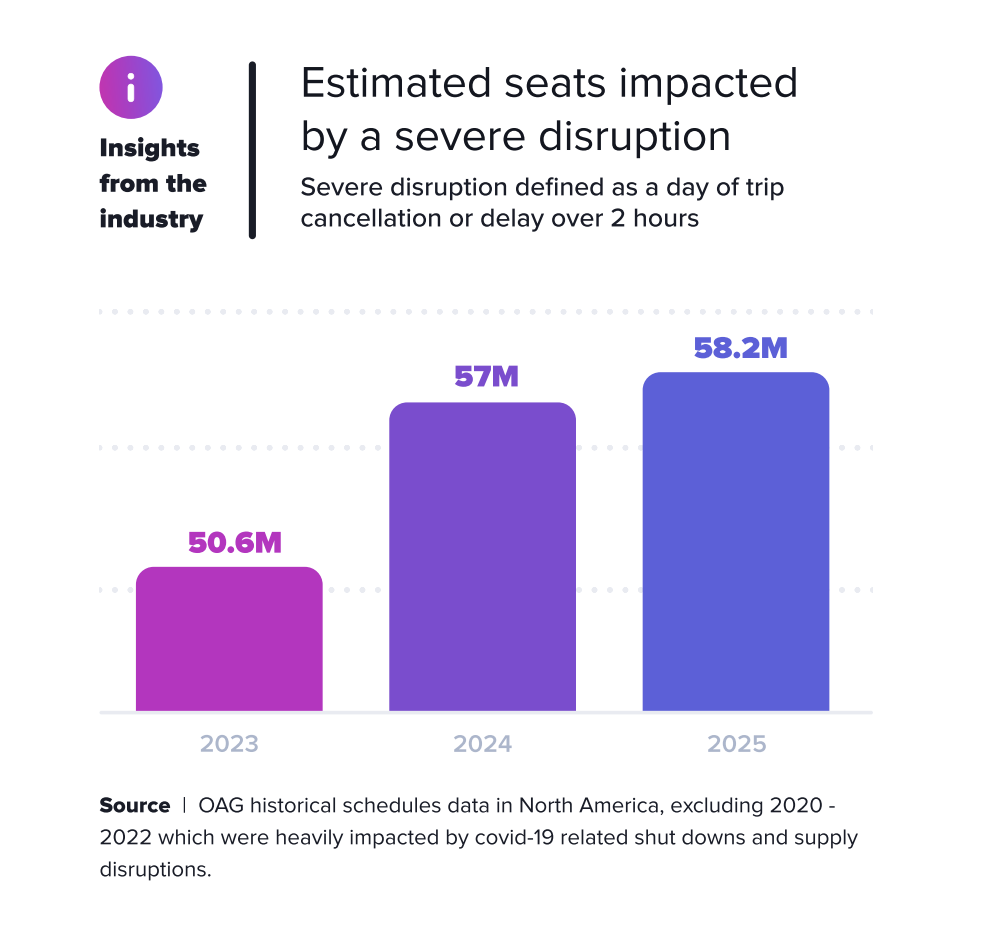
Flight disruptions, whether due to severe weather, technology outages, or airport operational staffing shortages, have become an inescapable reality of modern air travel. Since 2019, North American passengers have faced a steady rise in significant disruptions on their day of travel: In 2025, more than 58 million seats scheduled to depart US airports were impacted by significant disruptions, up from 50 million in 2019.
Unsurprisingly, traveler attention has tracked this upward trend. But it’s not just frequency driving concern, it’s severity.
These mass disruption events dominate news cycles and leave ripple effects that last days, amplifying the anxiety of travelers and those thinking ahead to their next trip.
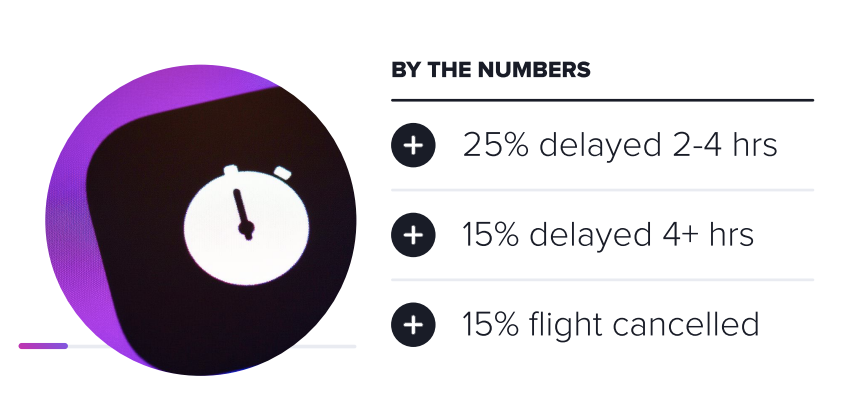
Research by HTS revealed that 42% of travelers who took at least one flight in the past 12 months experienced a delay of 2+ hours or more, and 15% experienced a flight cancellation.
Air traffic control staffing shortages, extreme weather events, and ongoing geopolitical conflicts have collectively elevated the probability of disruption on any given trip. Over the past several years consumers have absorbed this reality, driving the increase in concern and anxiety around future travel so high.
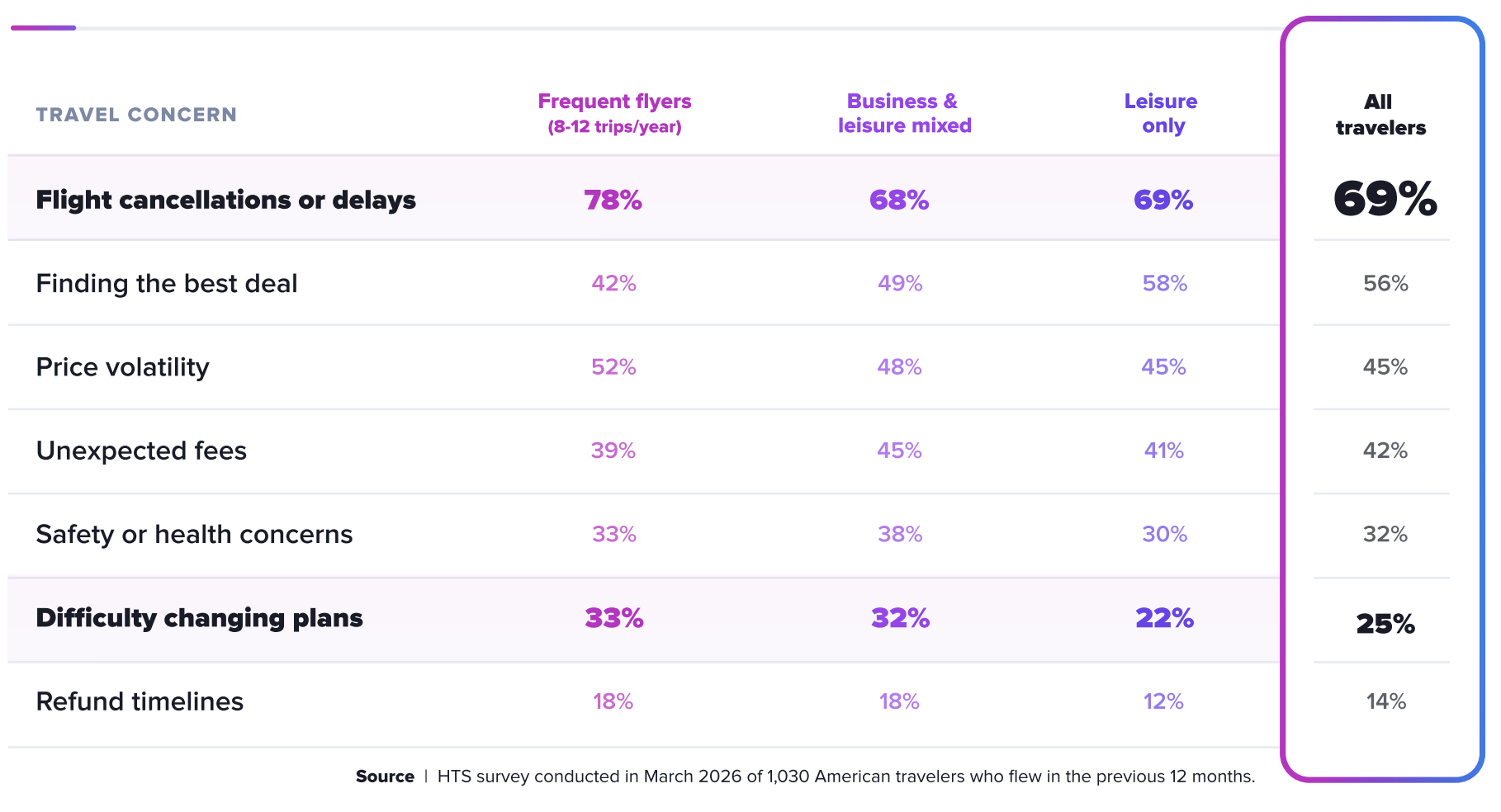
According to our research, 69% of US travelers ranked flight cancellations or delays their top concern when booking travel today.
It is the defining concern across leisure travelers, business travelers, frequent flyers and occasional flyers alike.
CONSUMER INSIGHTS
Respondents were asked to identify their top concerns when booking travel today
Discover HTS Disruption solutions
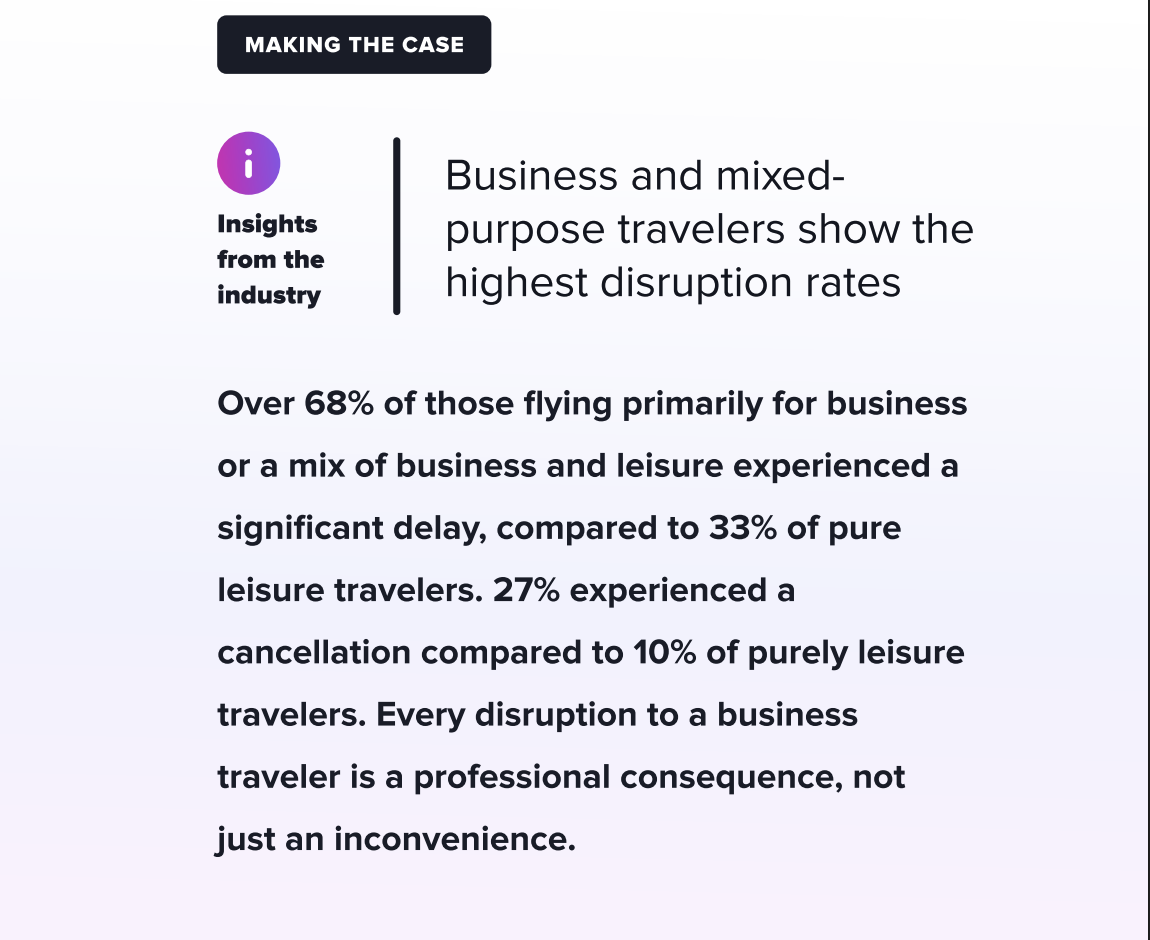
Disruption frequency intensifies with the number of flights taken per year. Among travelers taking 5-7 flights per year, 65% experienced a significant delay or cancellation. Among those flying 13 or more times, the rate of disruption reaches 80%. This is the industry’s highest-value segment and the one most exposed to the highest disruption rates.
CONSUMER INSIGHTS
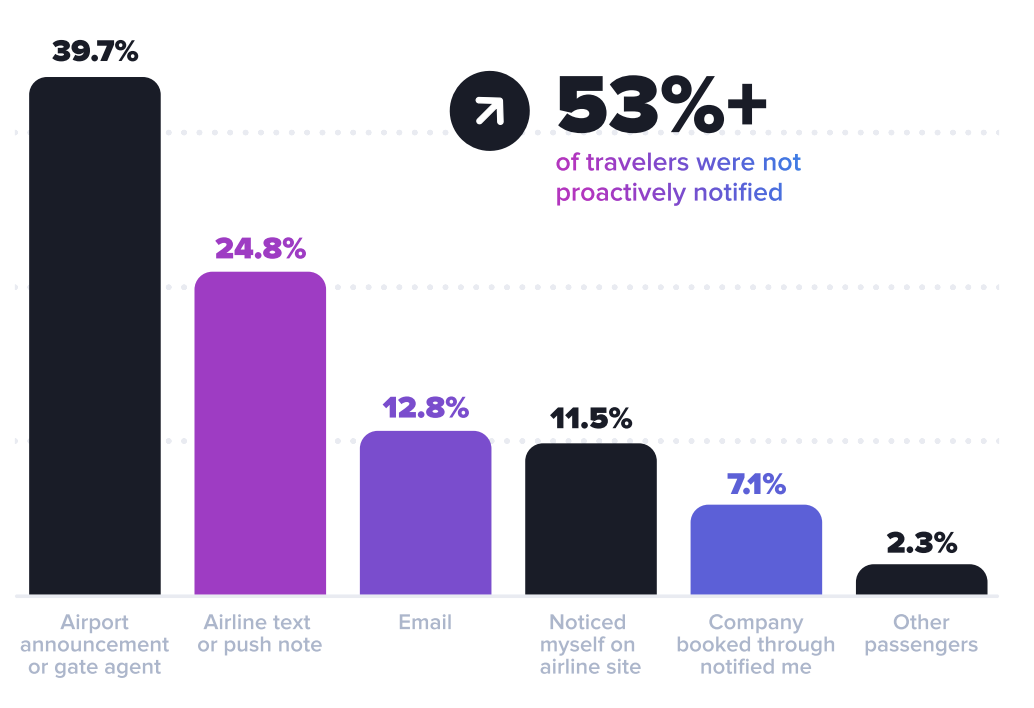
Respondents were asked how they first learned of the travel disruption
When disruption occurred, more than half (53%) of travelers who experienced a significant disruption claimed they did not receive a proactive notice of the impact to their trip. Instead, many found out from a gate agent, an airport announcement, or by simply noticing something was wrong themselves. Less than a quarter received a proactive notification via an airline app notification or text, 13% received an email.
When a disruption occurred, the most common response was to wait and continue on the disrupted flight (53%). Just 16% successfully rebooked through an airline’s self-serve app or website.
Despite the fact that nearly 24% of disrupted passengers looked for alternative flights on their own, most passengers either waited passively or sought human assistance at the airport to rebook on another flight.
Airlines that can close the self-serve gap by offering real-time options to customers and allowing them to skip long, frustrating customer support lines, will capture a unique opportunity to improve the customer
experience and drive loyalty.
Discover HTS Disruption solutions
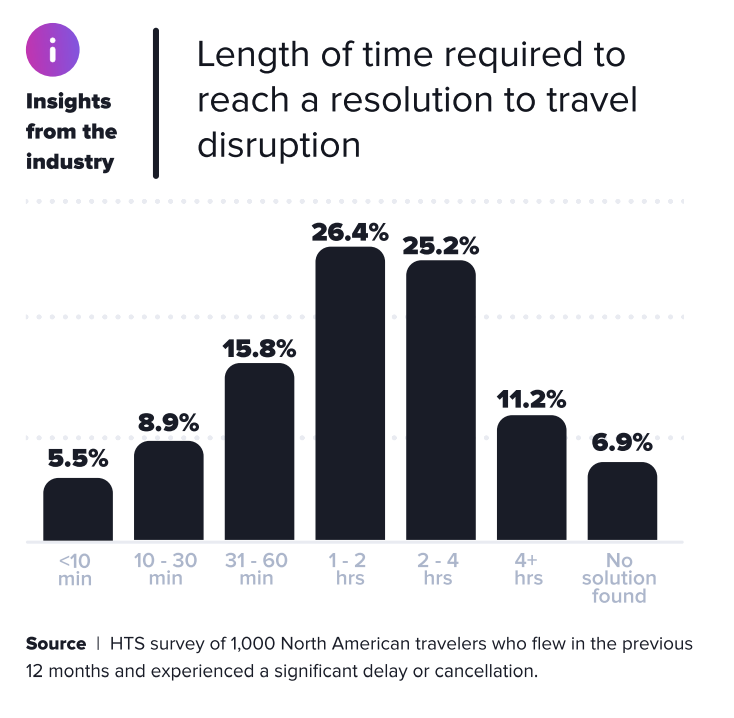
For travelers who experienced a disruption, finding a resolution took significant time. Only 15% of travelers resolved their situation in under thirty minutes. More than a third took over two hours to find a solution and 7% never reached a resolution at all.
The resolution process itself was polarizing for disrupted travelers who needed assistance. 39% or respondents say the resolution process for their disrupted flight was difficult. For leisure travelers, the difficulty rate was 42%, higher than for mixedpurpose or business travelers who tend to have more practice navigating delays and cancellations.
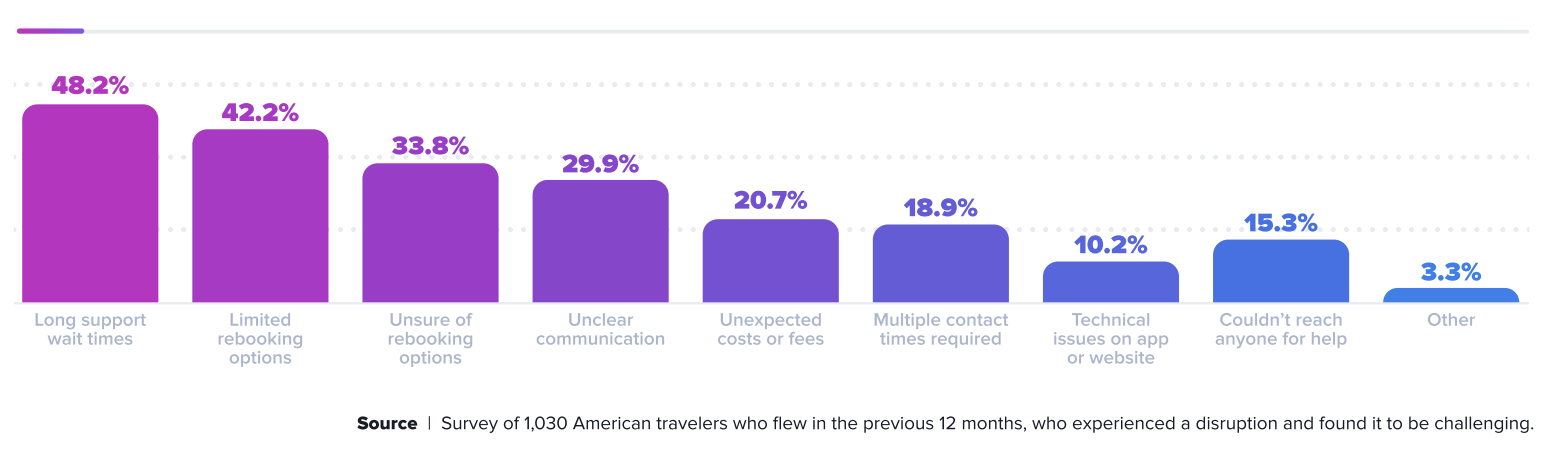
Unclear or changing communication affected nearly 30% of those who found the experience challenging — a solvable problem that proactive, real-time communication tools directly address.
CONSUMER INSIGHTS
Respondents were asked what made their resolution experience challenging
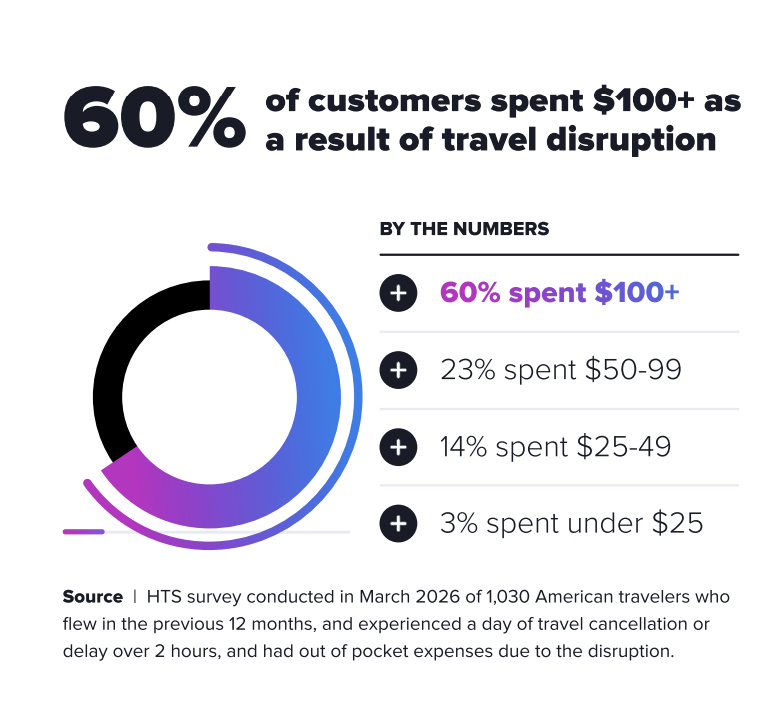
42% of travelers who experienced significant disruption over the past year incurred out-ofpocket expenses as a result. Most customers experienced financial impact in the $50-$200 range, though a meaningful share faced significantly higher costs, indicating real financial strain. In fact, 60% of affected customers spent at least $100, with 26% incurring expenses exceeding $200.
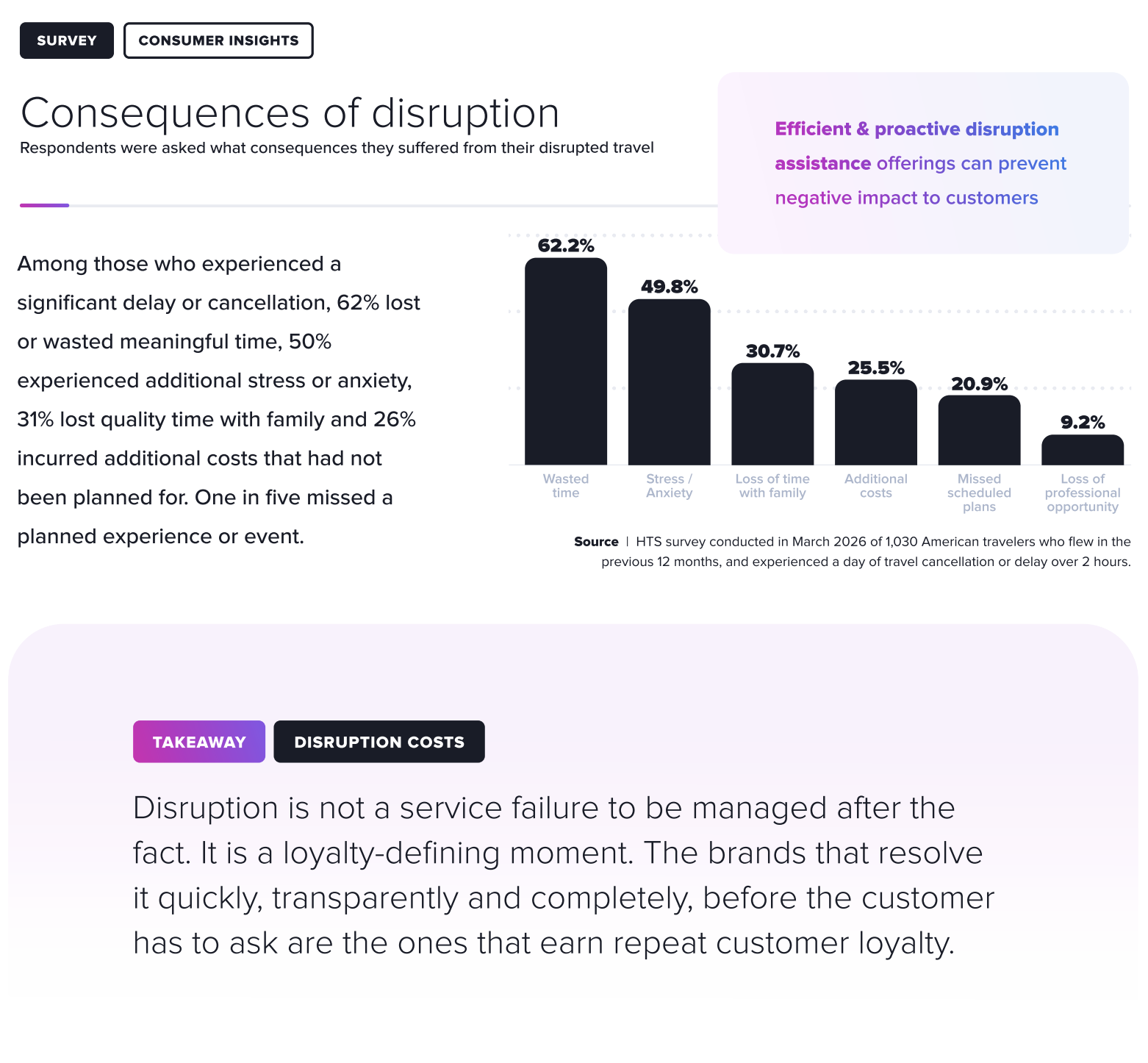
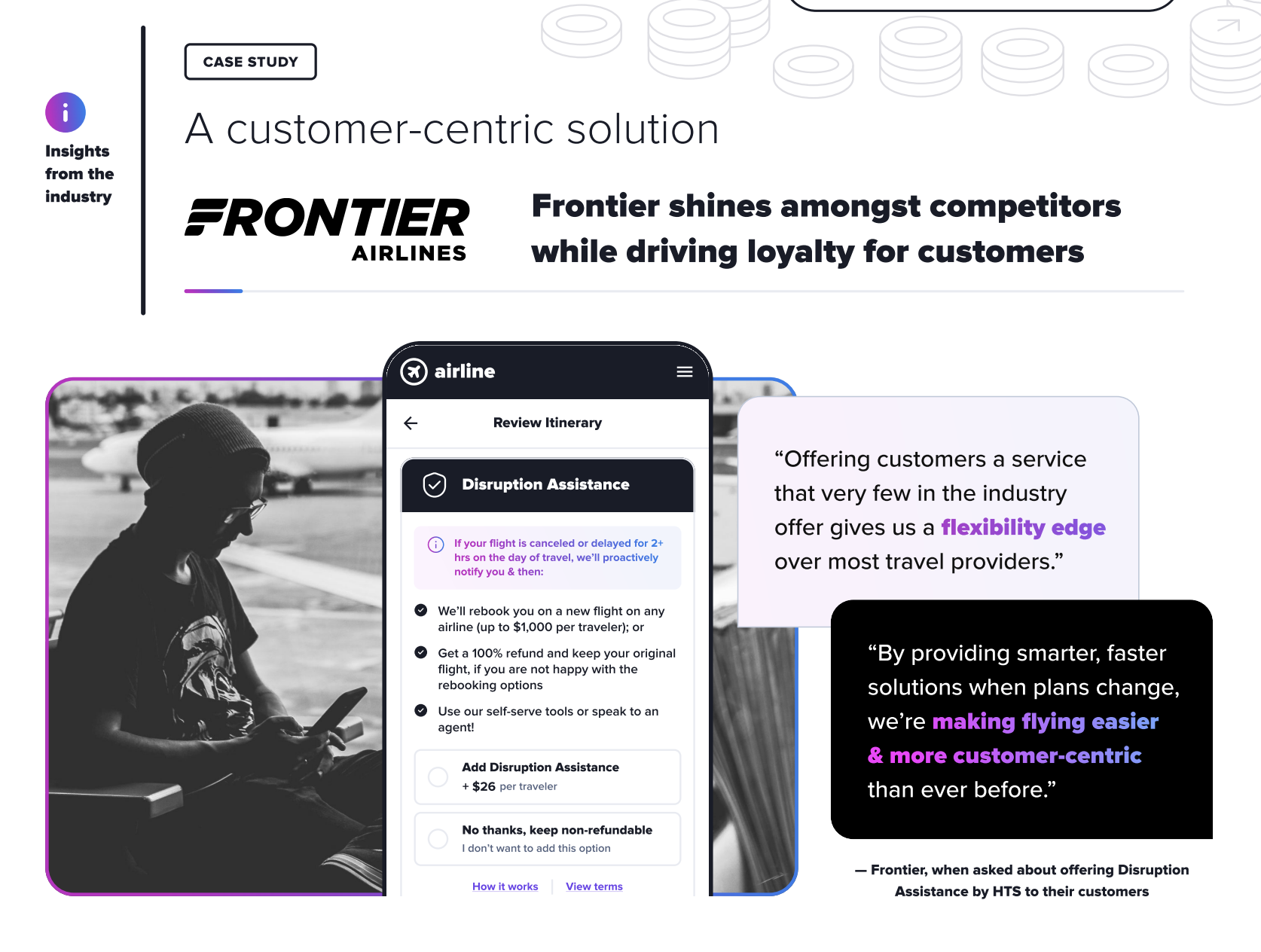
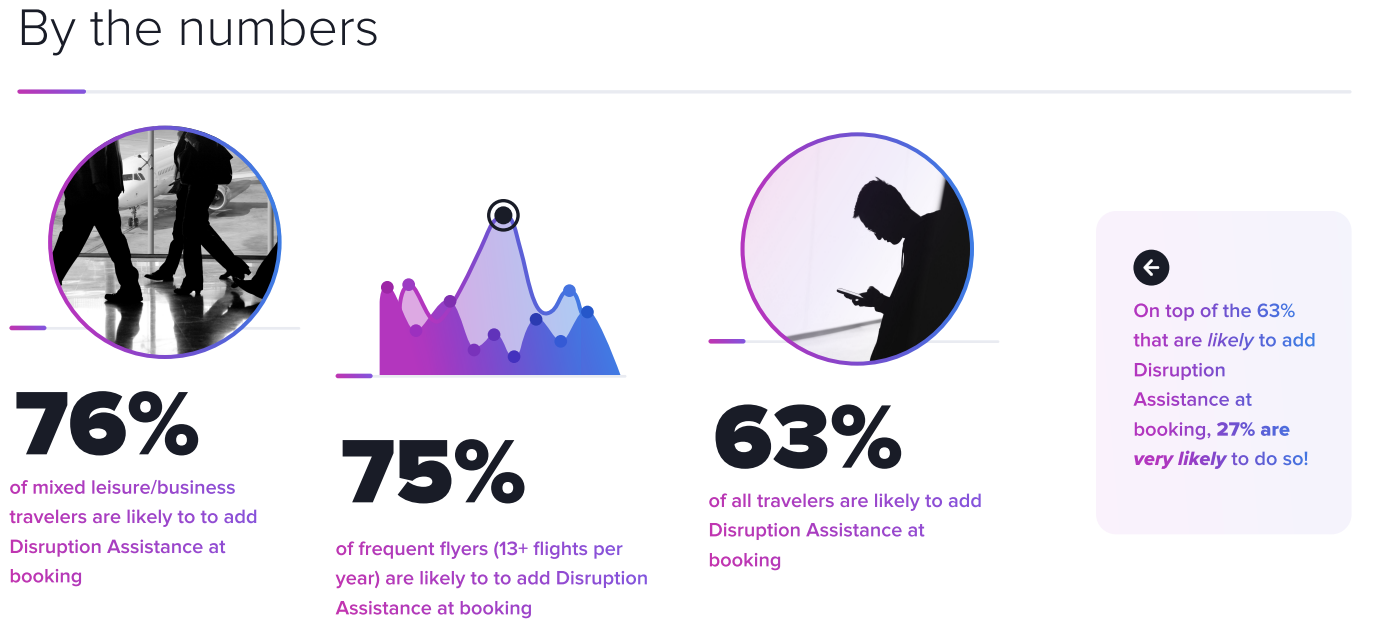
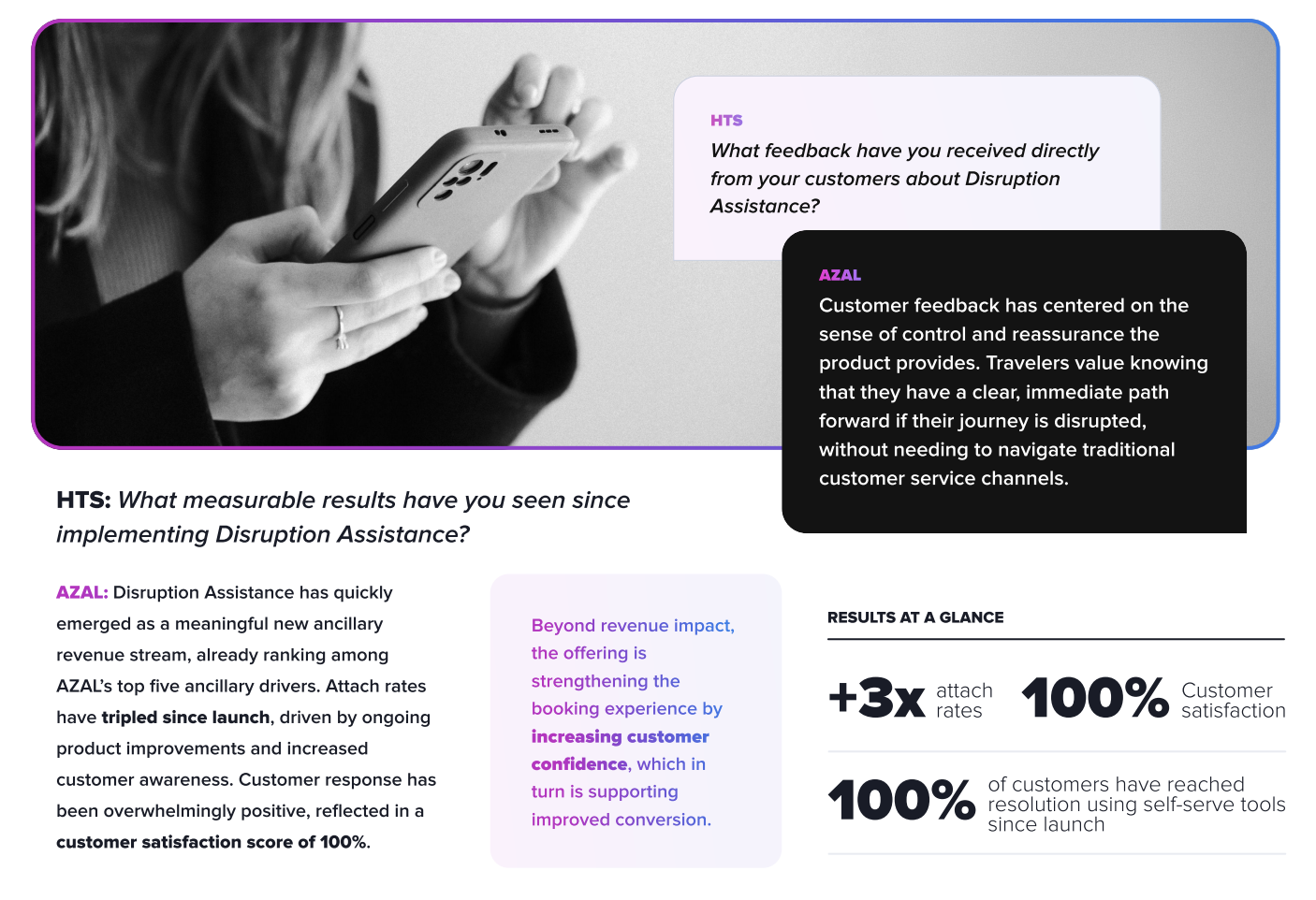
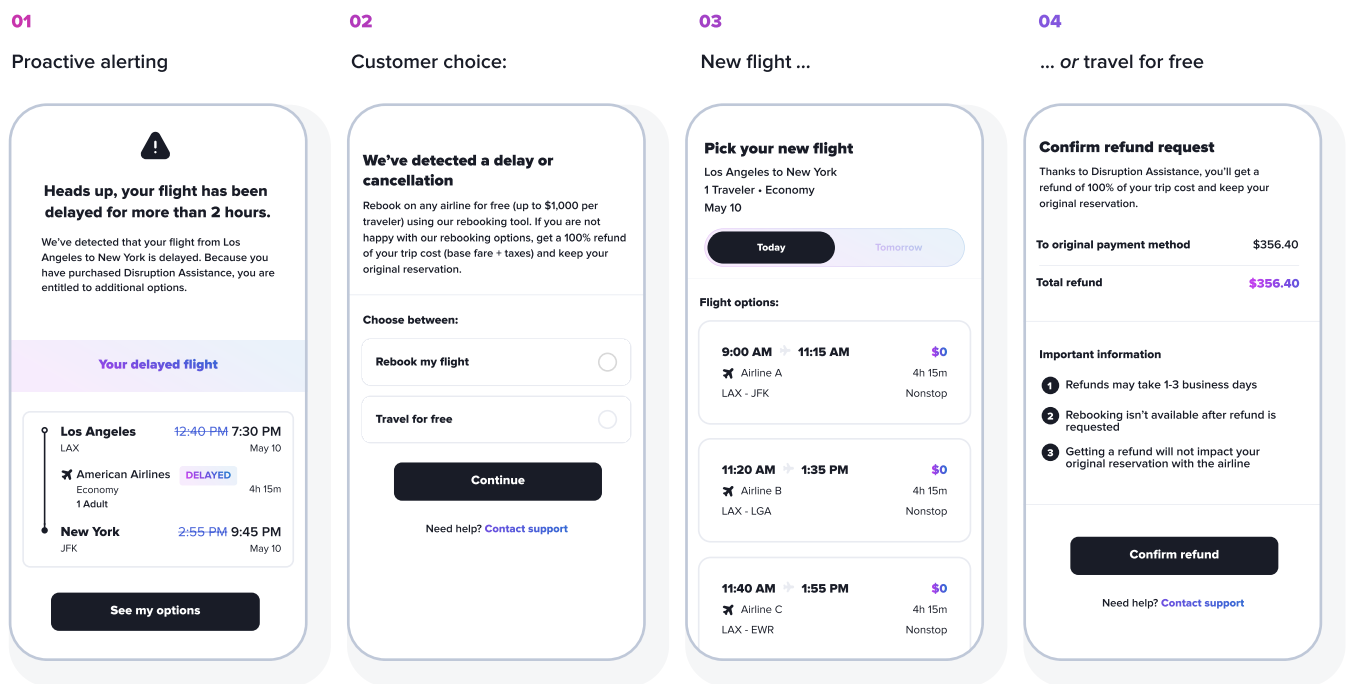
Travelers recognize the gap between what they currently receive during a disruption and what they would value and the data shows they are willing to pay to close it. When presented with a Disruption Assistance add-on — an option allowing travelers to, in the event of a significant delay or cancellation on the day of travel, rebook a new flight on any airline or, if dissatisfied with the rebooking options, receive a full refund — 63% of respondents said they would be likely to add it at booking. Twenty-seven percent said they would be very likely to do so.
Disruption Assistance by HTS helps travelers navigate delays and cancellations by allowing them to rebook a new flight on any carrier or if the rebooking options aren’t satisfactory, providing a full refund of their ticket and keeping their disrupted flight.
Purchase intent is strongest for disruption services among the segments that experience disruption most acutely.
Travelers who blend leisure and business travel show the highest likelihood to purchase at 76%, reflecting the compounding consequences a disruption creates when both personal and professional plans are at stake. Among the most frequent flyers (13 or more trips per year), intent remains similarly high at 75%. These are the customers who both need the product most and are most willing to pay for it.
Beyond individual purchase intent, Disruption Assistance also influences brand-level conversion. 63% of travelers say they would be more likely to book with a travel brand that offered it, with 22% saying they would be much more likely.
For airlines and travel platforms competing on a dimension beyond price, this is a direct booking preference signal — one that holds across leisure, business and mixed-purpose segments.
A CLOSER LOOK

Having experienced disruptions, travelers are not deterred from traveling; they are determined to be better prepared for the future. The data on forward-looking concern reveals an audience that has learned from experience and is actively seeking services to prepare for the future.
Among travelers who plan to fly in the next 12 months, 89% express some level of concern about delays or cancellations. 22% describe themselves as extremely concerned — nearly one in four future passengers approaching every booking with significant anxiety.
Levels of concern intensify as flight frequency increases. Among travelers taking 5-7 flights per year, 95% report concern about disruption (the highest of any frequency group).
Travel disruptions aren’t the only flexibility challenge; travel plans change, and they always have. But the latest data makes clear that the industry’s infrastructure for handling those changes hasn’t kept pace with traveler expectations.
These numbers climb sharply among the travelers who matter most to travel brands. Among those who fly five or more times a year, the rate of changes nearly doubles the national average. That number rises among frequent fliers, with 65% of those who fly 13+ times a year having made changes or cancellations to trips in the past year. Mixed-purpose travelers, those combining business and leisure, show a 34% rate for changes and cancellations, more than three times the rate of purely leisure travelers. Younger travelers are also significantly more likely to have navigated a change, with Millennials reporting a 25% rate and Gen Z travelers at 45%.
Nearly one in five respondents changed or cancelled a flight booking for personal reasons in the past year, independent of any airline related change. 13% changed their flight dates or times and nearly 6% canceled a trip outright.
Discover HTS Flexibility solutions
The reasons travelers cite for changing or canceling their flights reflect the unpredictability of everyday life. Personal or family circumstances are the leading driver, accounting for nearly 29% of voluntary changes. Shifts in schedule or logistics come next at 21%, followed closely by pre trip weather concerns, also at 21%.
Economic behavior plays a meaningful role as well. 11% of travelers said they changed or canceled because they found a better price or itinerary. Health reasons (9%) and work or school conflicts (7%) round out the picture.
CONSUMER INSIGHTS
CONSUMER INSIGHTS
Respondents were asked how far in advance they changed or cancelled their travel plans
Travelers need a system that can respond quickly to their change or cancellation of travel plans.
The timing of these changes adds another layer of urgency. Travelers making changes typically do so within 14 days of departure, with 40% of passengers making changes 3 - 14 days before their trip, 25% changing 1-2 days before and 20% changing on the same day as their travel plans. These are travelers in motion, responding to real life as it unfolds and they need a system that can respond just as quickly.
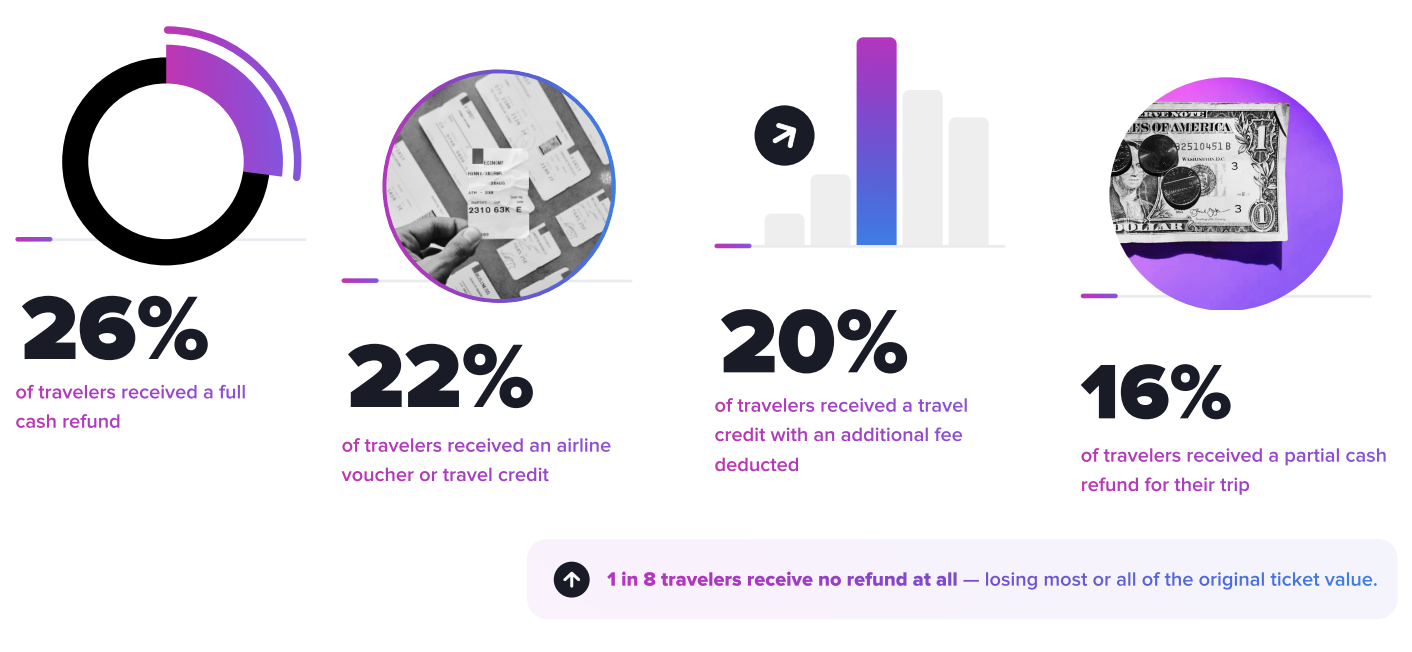
When travelers do change or cancel their plans, the financial outcome is variable and for many, extremely unsatisfying. The most straightforward resolution, a full cash refund to the original payment method, was received by just 26% of travelers who made a voluntary change. The majority navigated outcomes that were more restrictive, more costly or both.
22% received an airline voucher or travel credit, which means the value is tied to future travel with specific rules. Another 20% received a travel credit with an additional fee deducted and 16% received a partial cash refund. More than one in eight travelers, 13%, who voluntarily changed or canceled their plans received no refund at all, losing most or all of the original ticket value.
The fee picture is equally frustrating for travelers.
Among those who paid, the most common fee band was $50-$99, with 25% paying $100-$199 and 13% paying $200 or more. These are not trivial costs for what travelers often experience as a necessary, unavoidable life adjustment.
The change or cancellation process is not just expensive, it’s also a frustrating experience for travelers. When asked to describe the process, among travelers who changed or cancelled a flight, 36% described the experience as stressful and 29% as frustrating. The most common barriers noted were too many steps and too much effort (34%), long wait times (34%) and unclear policies or rules (33%). High fees were a factor for 30% of travelers and 30% said they were forced to contact customer support to complete what should have been a straightforward change or cancellation. Roughly one in five travelers flagged technical or app related issues as a contributing obstacle.
These tangible and reasonable complaints point to a change and cancellation infrastructure that asks travelers to work too hard, wait too long, pay too much, and rely on human intervention for something they expect to handle digitally and immediately.
Consumer demand for flexibility remains strong, reflecting the unpredictability of today’s travelers’ environment and needs. 84% of all travelers say flexibility to change or cancel their upcoming flight bookings is at least somewhat important. 20% rate it as extremely important. This is not a response to a single event but a reflection of a broader shift in how travelers are approaching booking in an era of sustained uncertainty.
Recent conflict in the Middle East has led experts to suggest travelers should be booking with more flexibility — recently, Brian Kelly of The Points Guy recommended that travelers book with Cancel for Any Reason ahead of 2026 spring and summer travel plans, given the current uncertainty in the region. He was articulating what the data already shows:
CONSUMER INSIGHTS
Flight flexibility is not a nice-to-have add-on. 84% of travelers say it matters for their next trip. 66% say they are likely to purchase an optional add-on that allows you to cancel for any reason before your trip to receive a refund. The demand for flexibility is clear; it’s a question of who is delivering it to their customers.
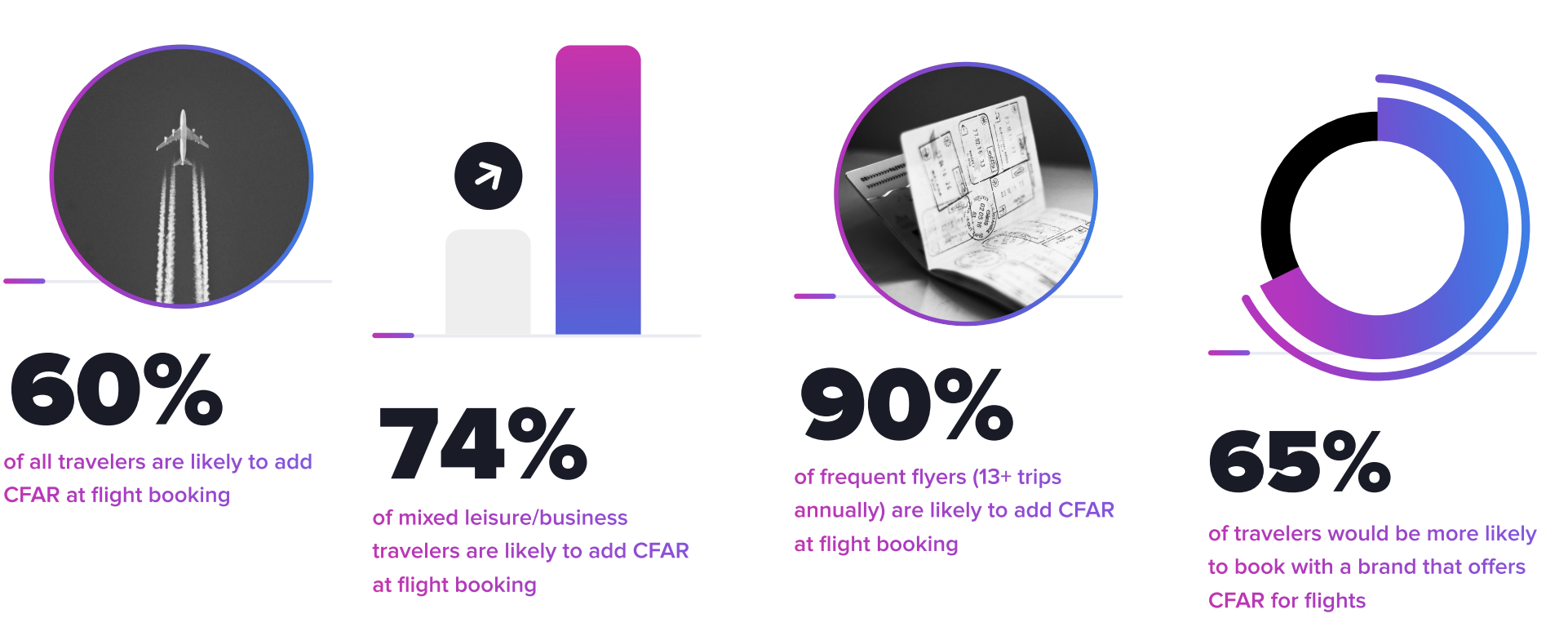
The strength of flexibility demand translates directly into purchase intent. When asked, 60% of travelers said they would be likely to add a Cancel for Any Reason (CFAR) option when booking a flight, which allows travelers to adjust their plans prior to departure, truly for any reason, regardless of the original booking terms and receive a refund. With 21% saying they would be “very likely” to do so.
Learn more about flexibility products
Get Started
CONSUMER INSIGHTS
A closer look at who has the highest intent to purchase Cancel for Any Reason
Get started with HTS fintech today
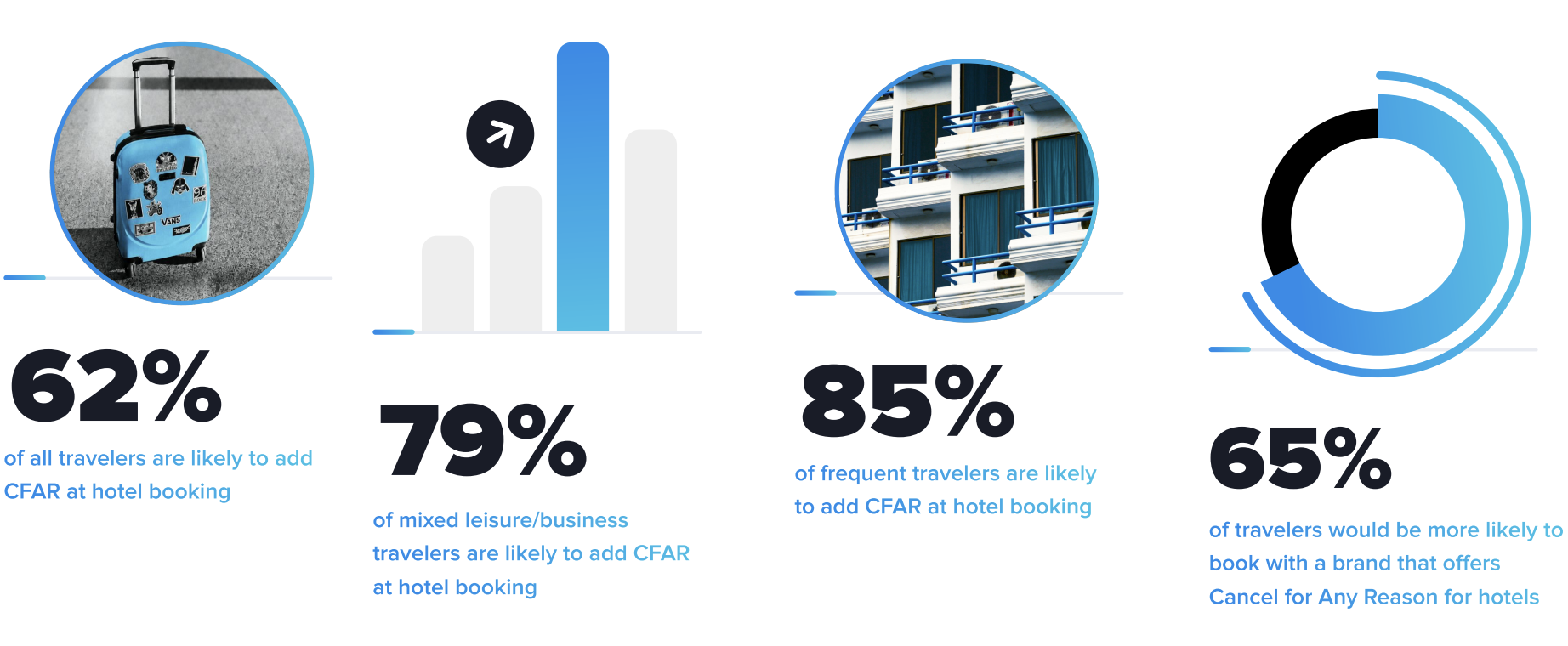
Among travelers who mix leisure and business, intent reaches 74% nearly fifteen points above the national average, reflecting the compounding risk that an inflexible booking creates when both professional commitments and personal plans are at stake. Among the most frequent flyers, those taking 13 or more trips per year, intent reaches 90%, making CFAR a near-universal expectation among the industry’s highest-value customers.
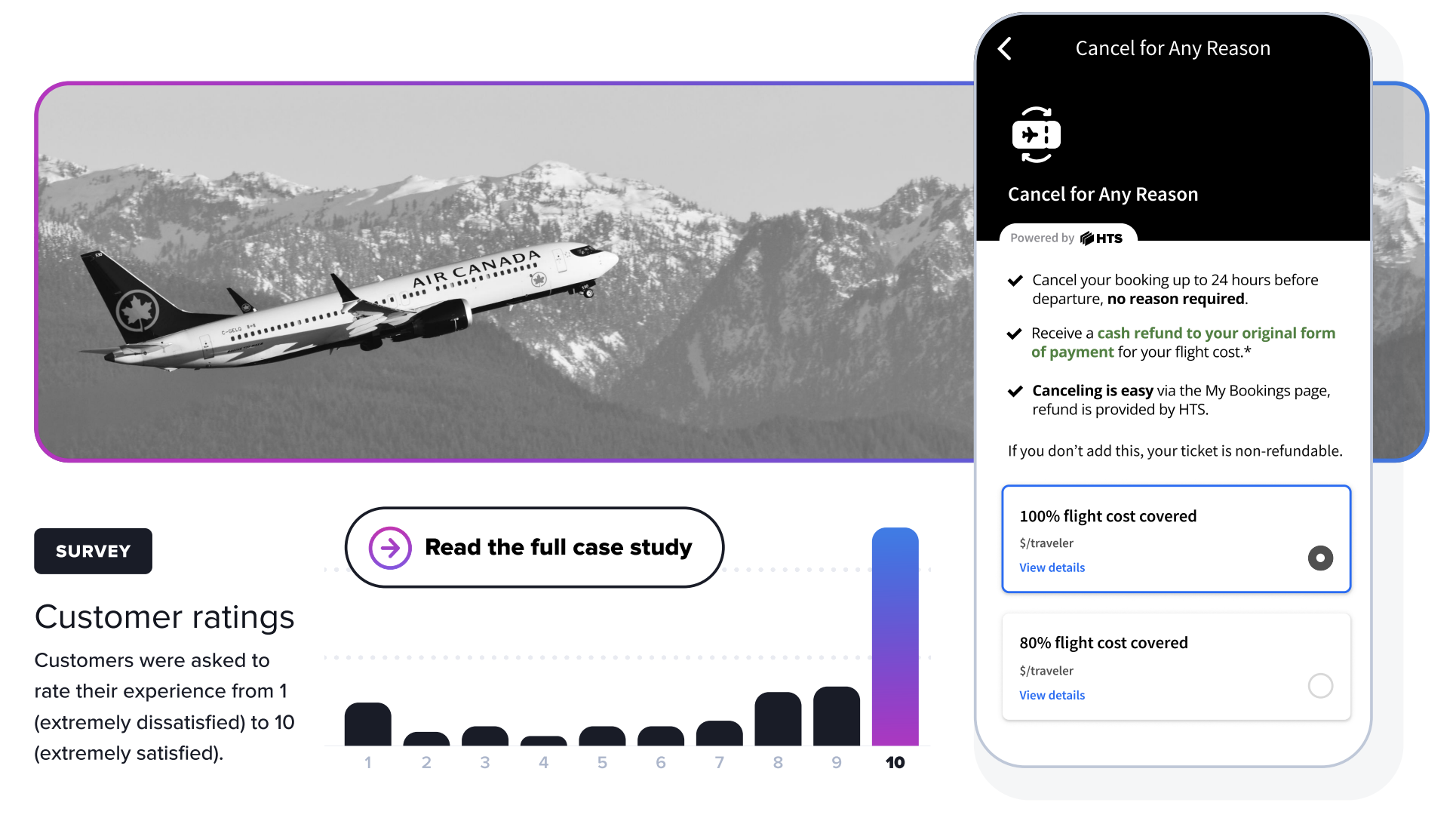
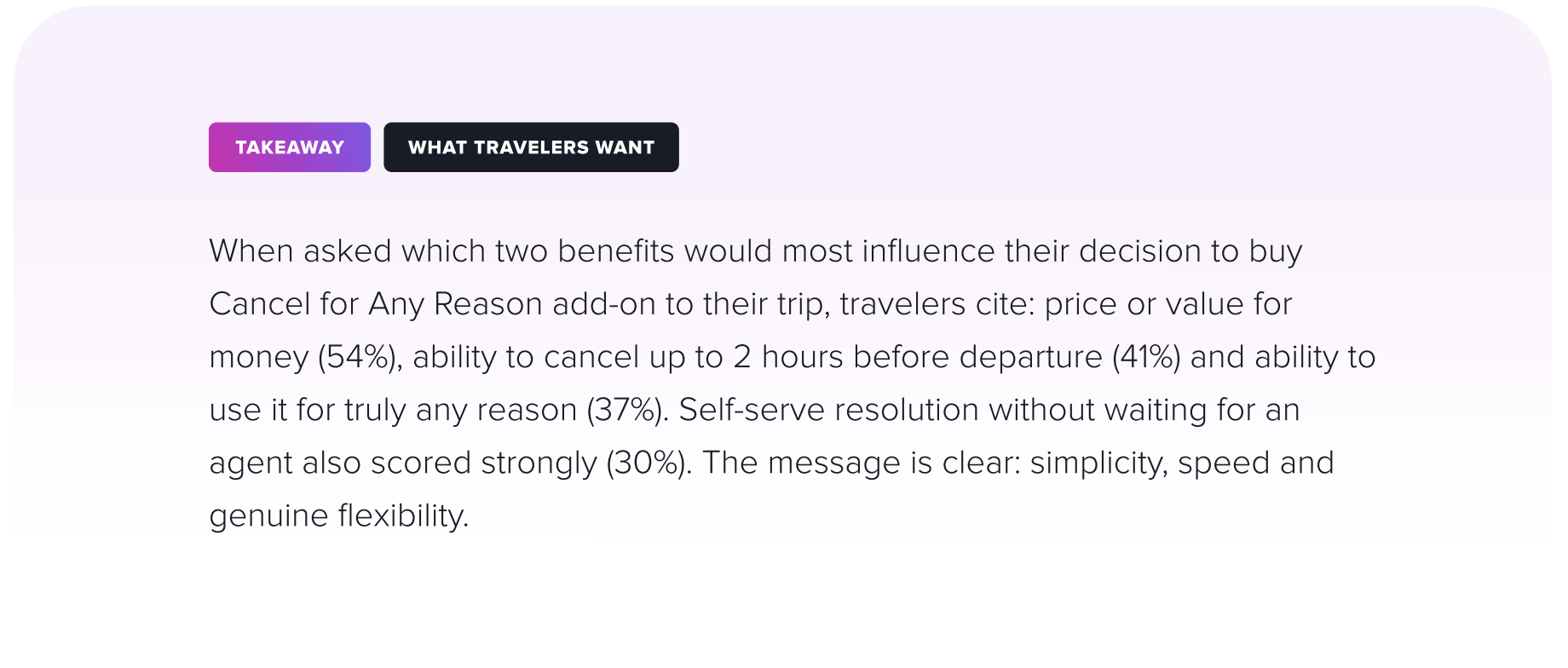
When asked which benefits would most influence their decision to purchase a Cancel for Any Reason add-on, travelers cited price or value for money (54%), the ability to cancel within a few hours before departure (41%), and the ability to use it for truly any reason (37%). Self-serve resolution without waiting for an agent was also a top driver at 30%. The message across all four is the same:
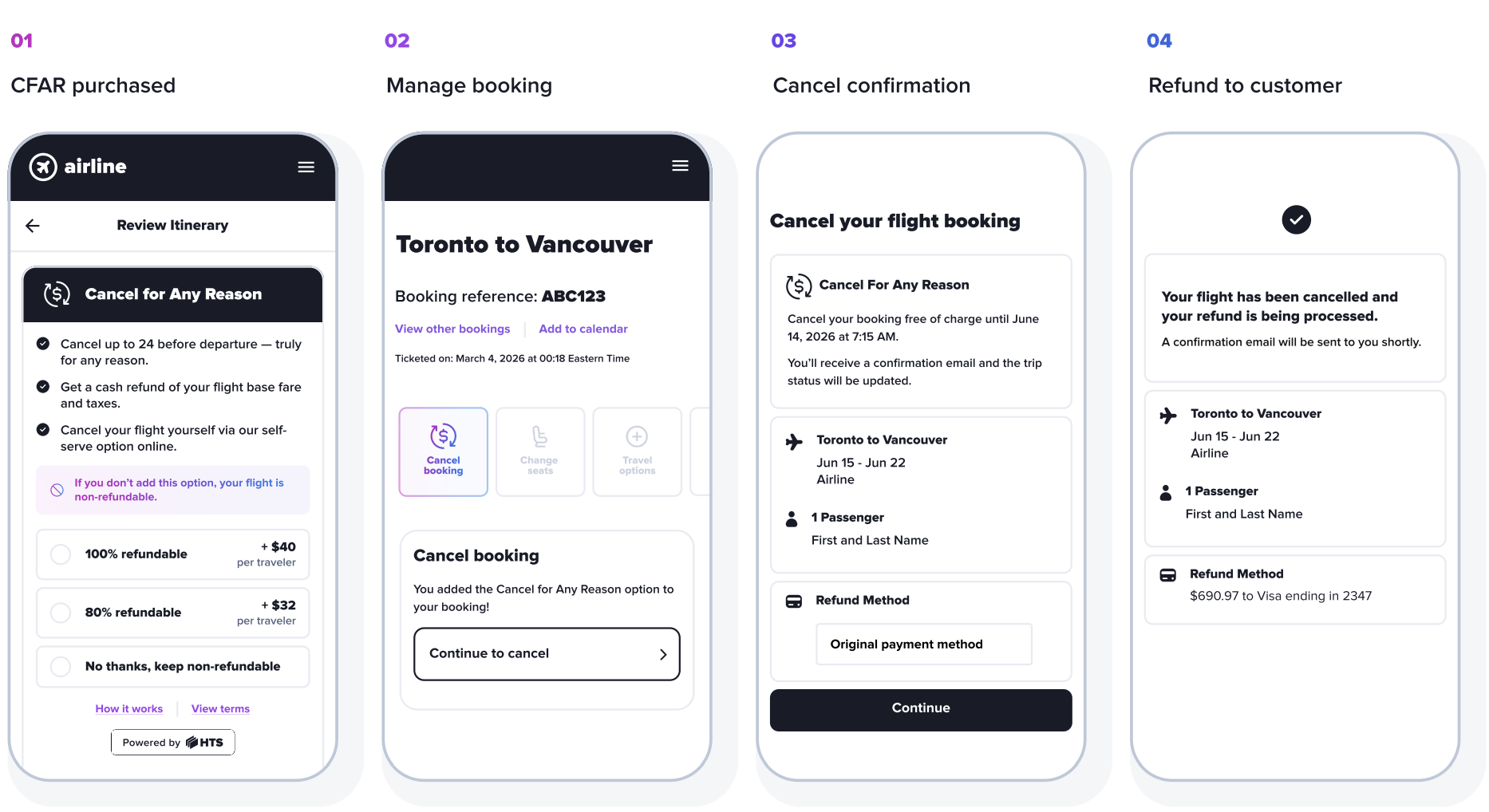
With HTS’ Cancel for Any Reason for flights, travelers can adjust their plans prior to departure, truly for any reason, regardless of the original booking terms and receive a refund. What travelers want from a flexibility solution is clear and consistent.
As with Disruption Assistance, CFAR is not just an ancillary; it is a driver of booking preference. 65% of travelers say they would be more likely to book with a brand that offers Cancel for Any Reason. Airlines and booking platforms that offer flexibility and optionality are tapping into a meaningful conversion lever, one that directly influences both attach rates and revenue.
Learn more about Cancel for Any Reason for flights
Get Started
Flight disruption dominates the conversation, but hotel flexibility represents a parallel and equally significant opportunity. Among the 77% of travelers planning to book a hotel in the next year, demand for cancellation flexibility is near-universal and purchase intent for CFAR hotel products is strong across every major segment.
Hotel flexibility is often treated as a simpler challenge than flight flexibility. Many hotels offer free cancellation windows by default and the perceived impact of a changed or missed stay tends to feel less severe than a missed flight. However, the data proves this wrong. When travelers are unable to reach their destination due to a flight disruption or when plans change for personal reasons, the hotel booking quickly becomes a financial risk that consumers are highly conscious of.
Among the respondents planning or considering a hotel stay over the next 12 months,
87% rate the flexibility to cancel their hotel booking as at least somewhat or more important.
That figure is strikingly close to the 84% who say the same about flight flexibility, and it carries the same commercial implication: hotel cancellation flexibility is not a niche preference. It is a mainstream expectation that the current flexible rate or nonrefundable rate does not fully meet.
Get started with HTS hotel flexibility today
Request a demo
Respondents were asked how important is it to have the flexibility to cancel your hotel booking
87% of travelers deem hotel cancellation flexibility importan
When presented with a Cancel for Any Reason for hotels add-on, allowing cancellation for any reason before the trip with a full or partial refund, 62% of hotel bookers said they would be likely to add it at booking.
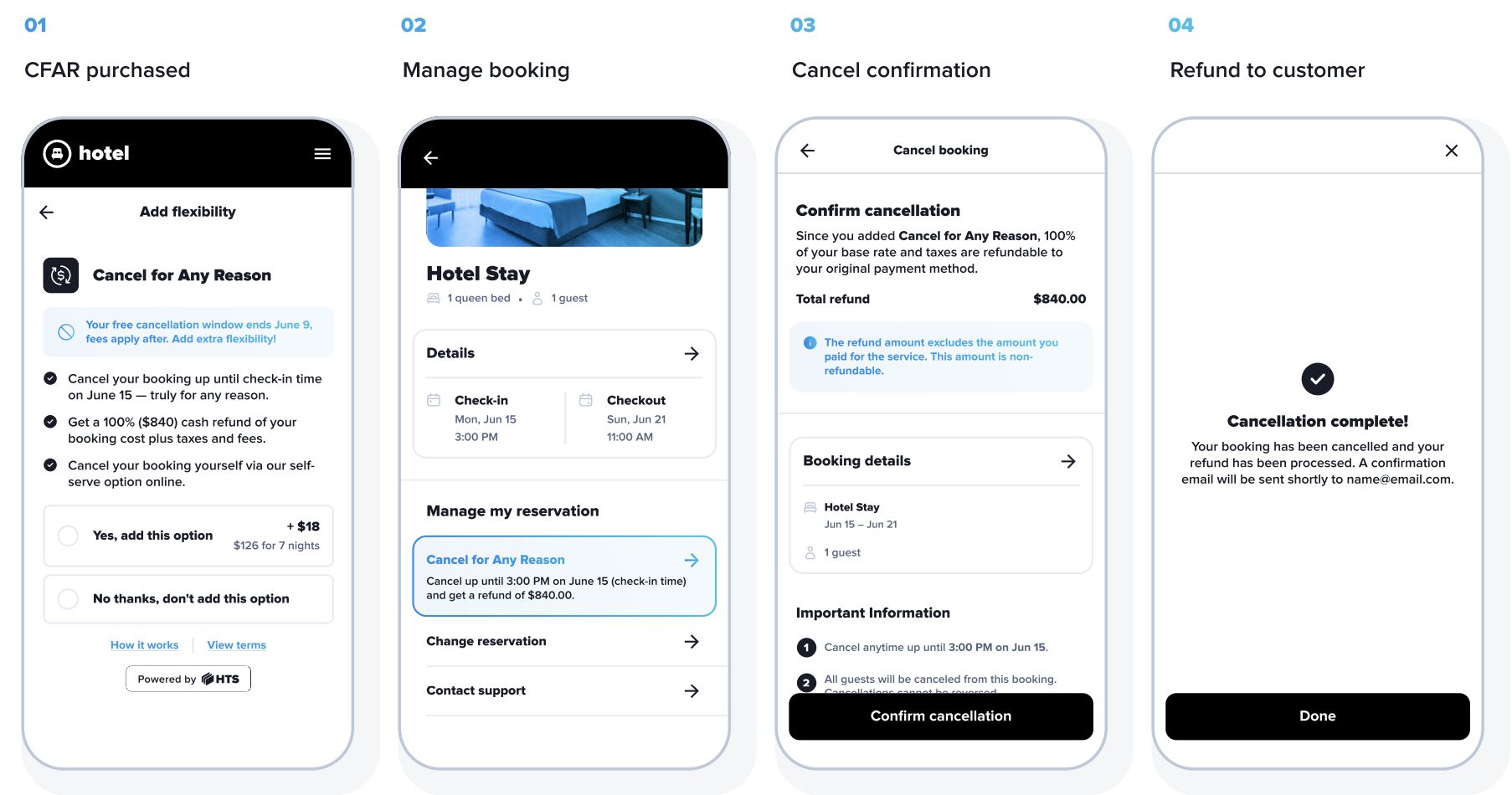
HTS’ Cancel for Any Reason for hotels, provides hotel guests with ultimate flexibility through a seamless, automated self-service experience and allows travelers to adjust their plans prior to checkin, truly for any reason, regardless of the original booking terms.
Respondents were asked:
Learn more about hotel flexibility products
Get Started
CONSUMER INSIGHTS
Respondents were asked how likely they would be to book with a travel brand that offers an optional add-on allowing you to cancel for any reason before your trip and receive a refund
As a brand preference driver, the product is equally powerful: 65% of hotel bookers say they would be more likely to book with a brand offering it. HTS’ Cancel for Any Reason for hotels gives hotel guests the ability to cancel at any point before checkin, for any reason, through a seamless automated self-service experience that requires no agent involvement.
A CLOSER LOOK
Launched in March 2026, HTS’ Cancel for Any Reason for hotels is live on Tripadvisor and Cloudbeds, with more partners coming soon.
Learn more about Cancel for Any Reason for hotels
Get Started
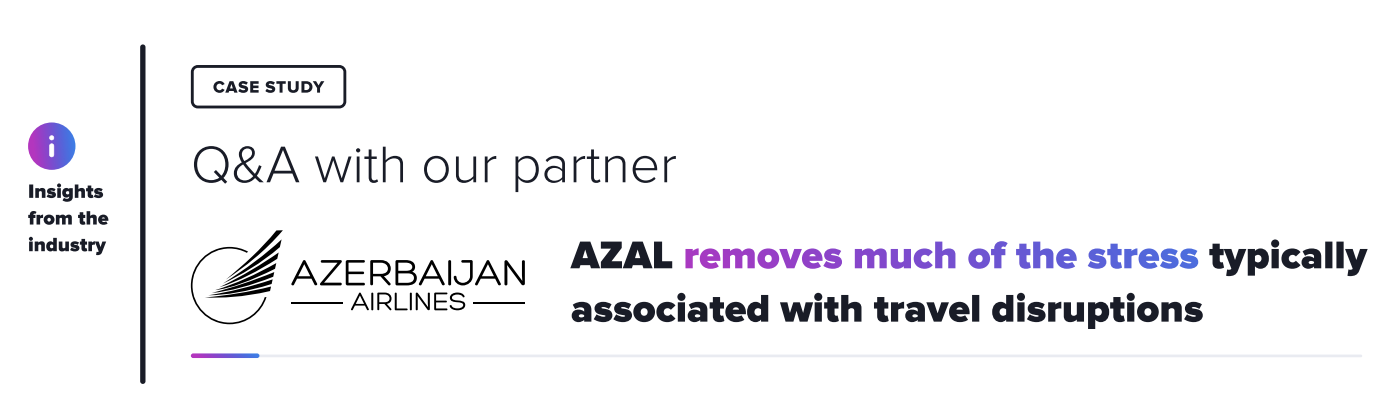
CASE STUDY
Cloudbeds redefines what’s possible for independent hotels & their guests
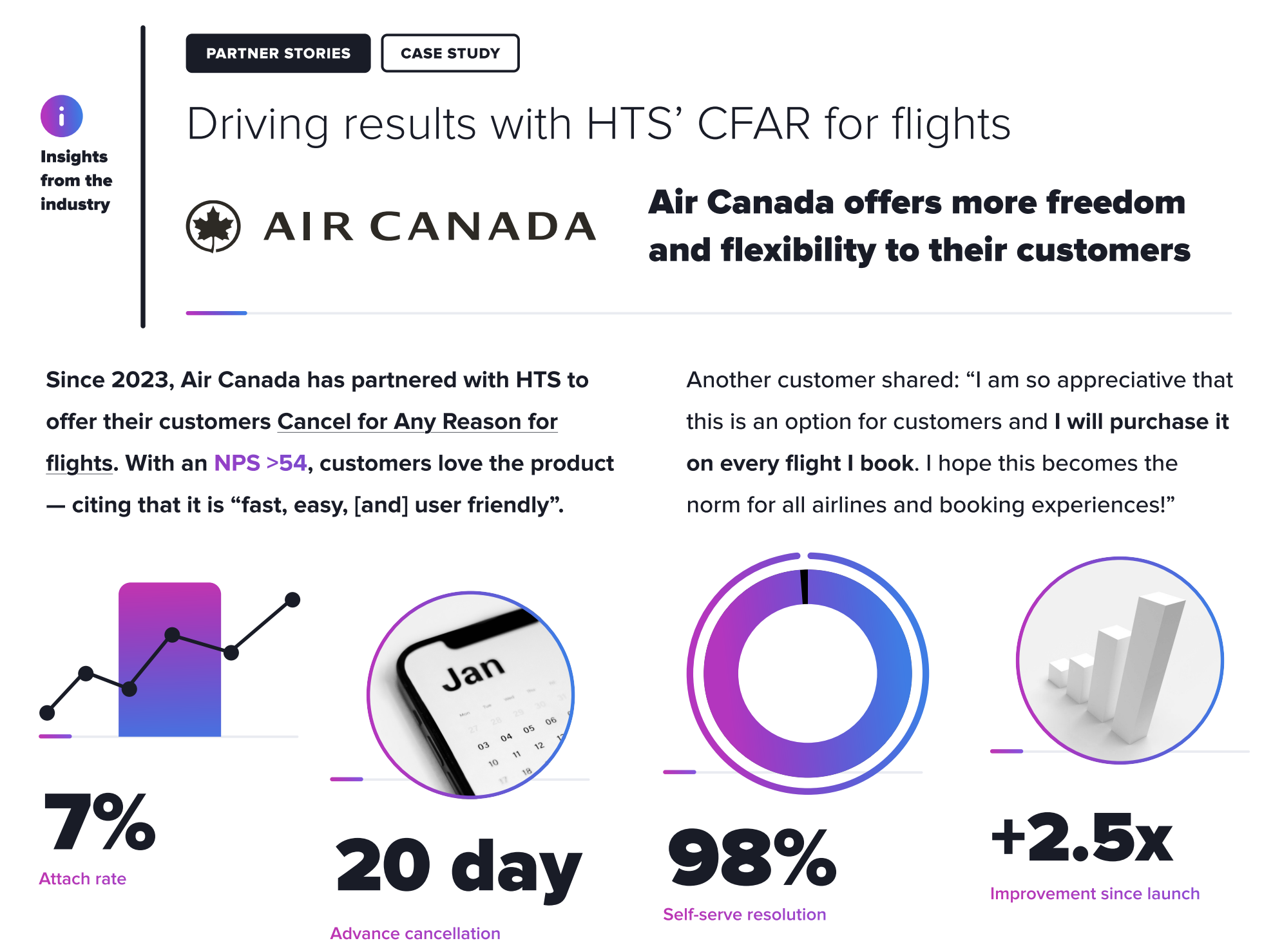
As a first-of-its-kind partnership, Cloudbeds and HTS bring innovation to hoteliers and their guests globally. This collaboration marks a significant milestone in hospitality technology and it s only just the beginning.
Since November 2025, Cancel for Any Reason for hotels not only unlocks a competitive edge for Cloudbeds hoteliers, but also opens up additional revenue opportunities and commission streams.
“Offering CFAR has strengthened our competitive positioning by allowing us to differentiate on flexibility, a key decision factor for modern travelers. In a landscape where many providers still rely on rigid cancellation policies, CFAR enables our partners to stand out and compete more effectively. It also fosters stronger customer loyalty, as travelers are more likely to return to providers that offer a flexible booking experience and prioritize their needs.”
— Adam Harris, CEO & Co-founder at Cloudbeds
To understand what solutions travelers actually want, this research asked consumers directly about their likelihood to purchase flexibility products when booking a trip. Products like Disruption Assistance and Cancel for Any Reason (CFAR) directly address the unpredictability today’s travelers face and travelers are willing to pay for the certainty and confidence they offer.
HTS has sold millions of fintech products across 180+ countries, and the performance data reflects a product category that has earned genuine consumer trust — with strong satisfaction and an 84% repeat purchase rate, reinforcing that once travelers experience flexibility, they continue to buy it.
Across HTS partner channels, fintech products such as Cancel for Any Reason and Disruption Assistance now represent the single largest driver of incremental margin, with fintech accounting for 45% of HTS’ total profit — underscoring just how powerful flexibility has become as both a consumer value proposition and a monetization lever
Get started with HTS fintech solutions today
Request a demo
The strength of purchase intent across both products, 63% for Disruption Assistance and 60% for CFAR, signals meaningful potential for attach rates at scale. That is nearly two in three travelers a majority so comprehensive that it crosses demographic, income, and frequency lines. More importantly, both products actively steer demand toward brands that offer them, turning flexibility into a competitive differentiator.
This is why fintech has rapidly become a core strategic investment area. Consumer adoption is being driven by structural changes in travel itself.
Ongoing volatility, from global events and labor shortages to weather and operational disruptions, has made travel planning inherently less predictable. As a result, travelers increasingly prioritize outcomes: refunds, rebooking and realtime resolution.
HTS fintech products deliver exactly that. This shift in mindset translates directly into behavior. During peak holiday travel,
For travel companies, the business case is clear. Fintech products consistently deliver strong, measurable results:
Flexibility is no longer a nice-to-have offering, it sits at the intersection of customer experience, conversion and profitability.
Consumers are clearly signaling demand. Today, travel is defined by uncertainty and that reality is shaping behavior before a trip even begins. 89% of travelers planning to fly in the next 12 months say they are concerned about disruptions, underscoring just how central this anxiety has become to the modern travel experience. Almost one in five travelers will also change or cancel their plans before even reaching the airport, for any range of personal reasons.
Demand for more choice and autonomy directly impacts conversion. Flexibility increasingly influences which brands travelers choose. In a market where core travel products are often commoditized, this creates a powerful and differentiated lever at the point of booking.
At the same time, fintech products convert demand into high margin revenue. In an industry where base travel pricing continues to compress, flexibility remains one of the few areas where companies can both differentiate their offering and expand margins.
The result is a rare alignment: a product that improves the customer experience while driving profitability.
As travel continues to evolve in 2026 and beyond, companies that invest in fintech are not just solving a customer pain point, they are redefining their value proposition. By embedding flexibility into the booking experience, they can drive higher conversion, build trust, unlock high-margin growth and deliver outcomes travelers today expect.
Those that lead here will both capture both share of wallet and share of mind. Those that don’t have the opportunity to risk being left behind.
Get started with HTS fintech products
Talk to our team
This report is based on a survey conducted in March 2026 in partnership with Opinium among 1,030 Americans who have taken at least one flight in the last 12 months.
Want to learn more about how HTS can supercharge your business?

HTS is the travel agency, fintech provider, and modern e-commerce platform that can grow and power your business.


© 2026 Hopper Inc.
© 2026 Hopper Inc.


